
Aviator is the crash game that made the entire genre mainstream — developed by Spribe in 2019, now played by 77 million people monthly across thousands of casinos worldwide, and the single most popular game associated with the 1win platform in Canada. The dual bet system, and the CA$230 sports bonus (claimable alongside casino play) creates an environment where Aviator sits at the centre of the experience.
The game itself is mechanically simple — a plane takes off, a multiplier climbs, and the player decides when to cash out before the plane disappears at a randomly determined point. A round lasts seconds. There are no bonus features, no free spins, no cascading wins, no hidden mechanics. One decision per round: cash out now or wait. The 97% RTP, the Provably Fair system that allows cryptographic verification of every round, and the dual bet feature that enables two simultaneous wagers with different cash-out strategies are the elements that give this simplicity its depth.
| Detail | Info |
|---|---|
| Developer | Spribe (launched 2019) |
| RTP | 97% (operator variants may exist — verify in-game) |
| Type | Crash game — rising multiplier with manual cash out |
| Min bet | CA$0.10 |
| Max bet | CA$150 |
| Max win per bet | ~CA$15,000 |
| Dual bet | Yes — two simultaneous bets per round |
| Auto Cash Out | Yes — set a target multiplier for automatic collection |
| Auto Play | Yes — automated rounds with pre-set parameters |
| Provably Fair | Yes — SHA-256 with server seed + client seed verification |
| Demo | Available — no registration, no deposit |
| Mobile | Full access — browser, Android app, iOS app |
This page covers how Aviator works on 1win, the dual bet system, the automation tools, the Provably Fair verification process, what the 97% RTP means in practical terms, why the Aviator signals that appear in search results are scams, the demo mode, and mobile performance.
How 1win Aviator Works
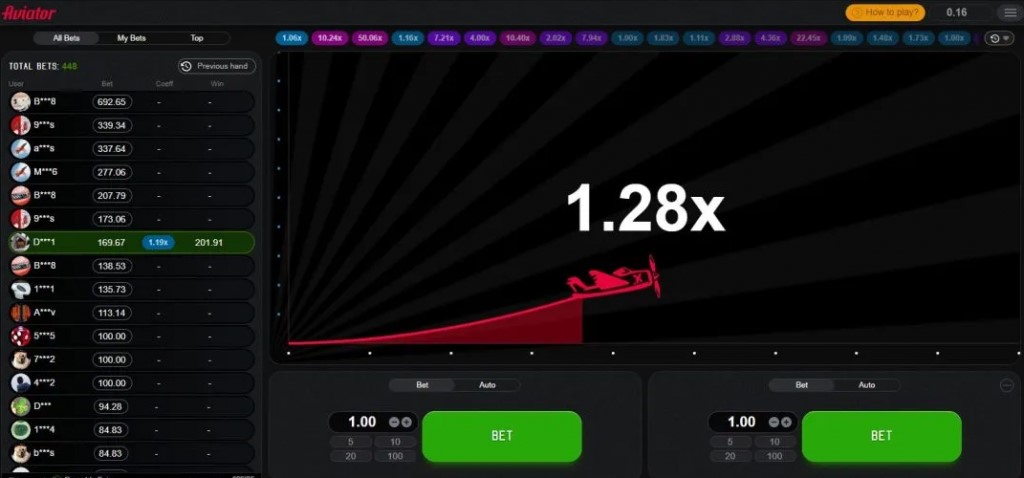
A round of Aviator follows three phases — bet, flight, and outcome. The entire sequence takes between three and thirty seconds depending on where the crash point falls, and the only player input is deciding when to press the cash-out button. Everything else — the multiplier trajectory, the crash point, the payout calculation — is handled by the game.
Phase 1 — Place the bet
Before the plane takes off, the player sets the stake — from CA$0.10 to CA$150. The betting window stays open for a few seconds between rounds, with a countdown visible on screen. Once the timer reaches zero, bets are locked and the round begins. No bets can be placed or modified after the plane starts moving.
Phase 2 — The flight
The plane takes off and the multiplier begins climbing from 1.00x. The ascent is continuous — 1.10x, 1.30x, 1.50x, 2.00x, 3.00x — with the speed of increase varying between rounds. Some rounds climb slowly and steadily. Others accelerate rapidly. The pace is cosmetic — it does not indicate when the crash will occur, because the crash point was determined by the Provably Fair system before the plane left the ground.
During the flight, the cash-out button is active. Every fraction of a second, the multiplier updates and the potential payout recalculates in real time — a CA$5 bet at 3.40x shows CA$17.00, at 5.00x shows CA$25.00, at 10.00x shows CA$50.00. The number climbs for as long as the plane flies.
Phase 3 — The outcome
The round ends in one of two ways:
- The player cashes out — presses the button while the plane is still flying. The multiplier at the exact moment of the press is locked, the payout is calculated (stake × multiplier), and the funds are credited instantly. The round continues for other players who have not cashed out, but for this player the outcome is settled.
- The plane crashes — disappears from the screen at the predetermined crash point. Every player who has not cashed out loses their entire stake for that round. There is no partial return, no consolation payout, no safety net. The bet is gone.
What the crash point can be
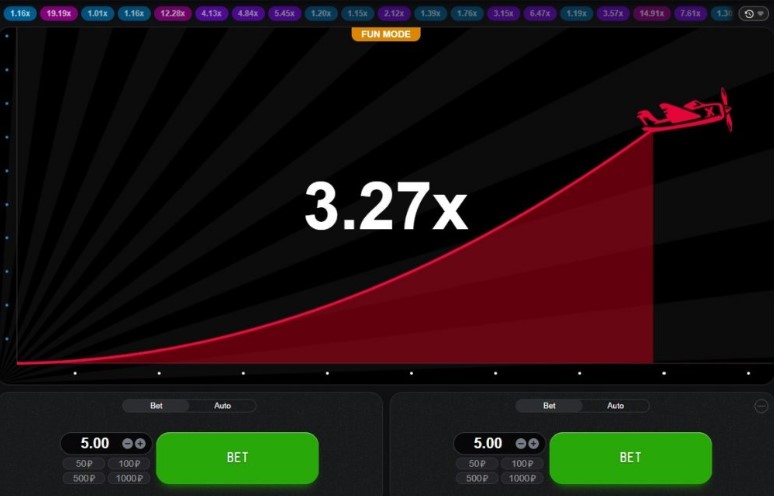
The crash point is not constrained to a narrow range — it can be 1.00x (instant crash before any meaningful multiplier), 1.50x, 5.00x, 50.00x, or theoretically much higher. The distribution is weighted toward lower values — rounds that crash below 2.00x are more common than rounds that reach 10.00x, and rounds that reach 50.00x are rare events. This distribution is what produces the 97% RTP over millions of rounds — frequent small crashes collect the house edge, while occasional high multipliers redistribute value to the players who stayed in long enough.
A round that crashes at 1.00x — before the multiplier moves at all — is not a malfunction. It is a mathematically normal outcome that the Provably Fair system can verify was determined before the round began. These instant crashes feel punishing because the player had no opportunity to act, but they are part of the distribution that makes higher multipliers possible in other rounds.
What makes 1win Aviator different from other crash games
Three elements distinguish the original Spribe Aviator from competitors like Lucky Jet, JetX, or Speed Cash — all of which are available in the 1win Games section:
- The dual bet system — Aviator allows two simultaneous bets per round, each with independent stakes and independent cash-out decisions. No other crash game in the 1win catalogue offers this. The dual bet is covered in detail in the next section.
- The social layer — the game interface shows other players’ bets and cash-out points in real time. A scrolling feed displays who cashed out at what multiplier and who lost. This social visibility creates a psychological dimension that solitary crash games lack — watching another player cash out at 8.00x while the multiplier continues to 15.00x generates information that is statistically irrelevant but emotionally influential.
- The rain feature — a social mechanic where players can distribute small amounts to others in the game chat. It does not affect gameplay or RTP but adds a community element that keeps players engaged between rounds in a way that purely solitary crash games do not replicate.
The combination of mechanical simplicity, social visibility, and the dual bet system is the architecture that turned 1win Aviator from one of many crash games into the crash game — the title with 77 million monthly players and a presence in over 2,000 casino lobbies worldwide.
Dual Bet System — Two Bets, Two Decisions, One Round
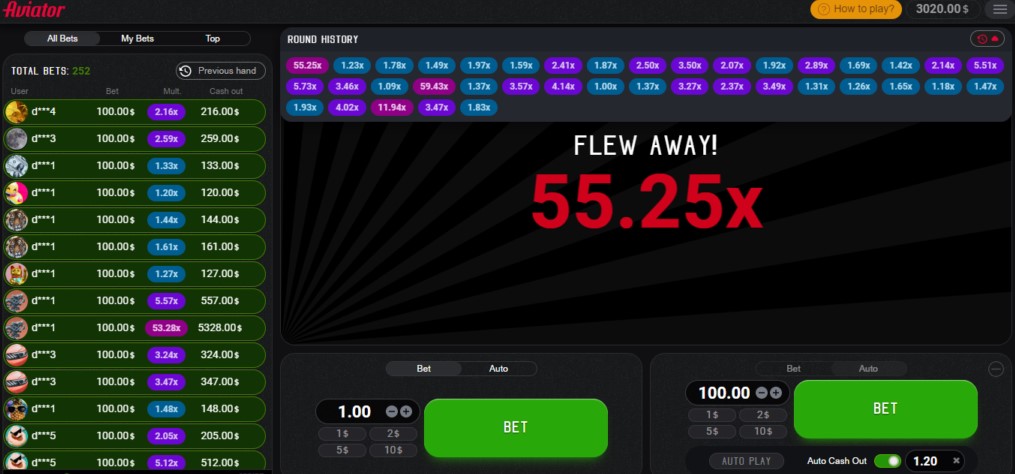
The dual bet is Aviator’s most distinctive mechanical feature and the one that adds genuine strategic depth to a game that would otherwise consist of a single binary decision per round. Two separate bets can be placed before each round — each with its own stake, each with its own cash-out button, and each operating independently of the other. Cashing out on bet one does not affect bet two. Losing bet two does not cancel bet one if it was already cashed out.
How it works
The betting interface displays two panels — Bet 1 and Bet 2 — each with its own stake input. Before the round starts, the player sets the amount for each bet independently. They do not need to be equal — CA$5 on Bet 1 and CA$0.50 on Bet 2 is a valid combination, as is CA$1 on both or CA$10 on Bet 1 with no Bet 2 at all. Using the second bet is optional. Many players use only Bet 1 and leave the second panel empty. But for those who engage with both, the dual system opens up approaches that a single bet cannot replicate.
Three practical ways to use the dual bet
- Conservative + aggressive split. Bet 1 at a higher stake with a low cash-out target — CA$5 cashed out at 1.50x for a CA$7.50 return. Bet 2 at a smaller stake left to run higher — CA$1 left in until 5.00x or beyond. The first bet secures a frequent, modest return. The second bet rides the multiplier for the rare rounds where it climbs significantly. The conservative bet covers the cost of the aggressive bet across multiple rounds — when Bet 2 hits at 8.00x or 12.00x, the return is meaningful without the full stake having been at risk.
- Ladder approach. Both bets at equal stakes with staggered cash-out points — Bet 1 cashed out at 2.00x, Bet 2 at 4.00x. If the multiplier crashes between 2.00x and 4.00x, Bet 1 was already secured and Bet 2 is lost — a net result that is better than losing both and worse than winning both. The ladder reduces the all-or-nothing dynamic of a single bet without eliminating the upside of holding for a higher multiplier.
- Auto Cash Out + manual. Bet 1 with Auto Cash Out set at a fixed target — 2.00x every round, no decisions required. Bet 2 managed manually, cashed out based on gut feeling, the flight trajectory, or whatever the player uses to make the in-the-moment decision. The automated bet provides a consistent baseline return while the manual bet captures the variable, emotionally-driven side of the game. This approach separates the disciplined component from the experiential component without forcing the player to choose one or the other.
What the dual bet does not do
The dual bet does not change the RTP, does not change the crash point, and does not provide any mathematical edge that a single bet at the combined stake would not produce over time. A player using two CA$5 bets per round has the same expected return as a player using one CA$10 bet per round — the 97% RTP applies to total wagered regardless of how it is distributed across bets.
What the dual bet changes is the experience of playing — the emotional and psychological shape of each round. A player with one CA$10 bet faces a single, undivided decision: cash out or wait. A player with two CA$5 bets faces two sequential decisions within the same round, each informed by what happened to the other. Cashing out Bet 1 at 2.00x and then watching the multiplier climb to 9.00x with Bet 2 still active is a fundamentally different experience from watching one CA$10 bet climb to 9.00x with nothing secured. The tension is different. The regret profile is different. The decision framework is different. And over hundreds of rounds, those differences influence behaviour in ways that a single-bet structure does not produce.
Auto Cash Out and Auto Play — Automation Tools
1win Aviator includes two automation features that remove the manual element from the cash-out decision and the bet placement process. Neither changes the RTP, neither provides a mathematical advantage, and neither constitutes a “strategy” in any meaningful sense. What they offer is consistency — the removal of the emotional, in-the-moment decision-making that produces the most erratic behaviour across extended sessions.
Auto Cash Out
Auto Cash Out allows the player to set a target multiplier before the round begins. If the plane reaches that multiplier, the bet is cashed out automatically without the player needing to press anything. If the plane crashes before reaching the target, the bet is lost — exactly as it would be in manual mode.
The setting is configured per bet — and because the dual bet system operates two independent panels, each bet can have its own Auto Cash Out target. Bet 1 set to auto cash out at 1.50x while Bet 2 is set at 5.00x replicates the conservative-plus-aggressive approach described in the dual bet section, running continuously without manual intervention round after round.
What Auto Cash Out solves
The primary value of Auto Cash Out is not speed — it is discipline. A player who decides before a session that 2.00x is the right cash-out point can set Auto Cash Out at 2.00x and remove the temptation to hold longer. Without automation, the same player watches the multiplier pass 2.00x, sees it climbing toward 3.00x, hesitates for a fraction of a second — and that hesitation either produces a bigger win (reinforcing the habit of holding past the target) or produces a total loss (reinforcing nothing, because the emotional sting of the loss is processed differently from the logical lesson it should teach).
Auto Cash Out eliminates the hesitation. The target is set. The execution is mechanical. The multiplier hits 2.00x and the bet is collected before the player’s brain has time to second-guess. Over 100 rounds, the difference between a player who manually cashes out “around 2.00x” and a player who auto cashes out at exactly 2.00x is not in the average multiplier collected — it is in the variance of decisions. The manual player sometimes cashes at 1.80x (too early, out of fear) and sometimes at 2.40x (too late, out of greed). The automated player cashes at 2.00x every time. The consistency does not change the expected return. It changes the experience of playing — fewer regrets, fewer impulse-driven deviations, and a session that feels controlled rather than reactive.
What Auto Cash Out does not solve
Auto Cash Out cannot protect against rounds that crash before the target is reached. A player with Auto Cash Out set at 3.00x still loses on every round that crashes at 2.90x. The automation handles the cash-out timing — it does not influence where the crash point falls. Setting a higher Auto Cash Out target means collecting larger payouts less frequently. Setting a lower target means collecting smaller payouts more frequently. The 97% RTP applies identically across all settings — the automation distributes the same expected return into a different pattern of outcomes, not a better one.
The most common mistake with Auto Cash Out is adjusting the target after a losing streak. Five rounds crashing before 3.00x feels like evidence that 3.00x is “too high” — so the player drops to 1.50x. The next three rounds reach 8.00x, 5.00x, and 12.00x. The player raises the target back to 4.00x. This reactive adjustment is exactly the behaviour Auto Cash Out is designed to prevent — and it defeats the purpose entirely. The target should be set before the session based on the player’s risk tolerance and left unchanged for the duration. Adjusting it between rounds reintroduces the emotional decision-making that the automation exists to eliminate.
Auto Play
Auto Play runs consecutive rounds automatically — placing the pre-set bet amount, waiting for the round to start, and either cashing out at the Auto Cash Out target or losing the bet if the crash comes first. The player sets the number of rounds, the stake, and the Auto Cash Out multiplier. The game handles everything else.
Auto Play is the combination of Auto Cash Out with automatic bet placement — a fully hands-off mode where the player defines the parameters and watches (or does not watch) as the session runs. It is the appropriate tool for players who have tested their preferred settings in the demo, know their target multiplier, know their per-round stake, and want to execute that approach without manually repeating the same inputs for every round.
The risk of Auto Play
Auto Play removes friction — and friction, in gambling, is sometimes protective. A player who places bets manually must actively choose to continue after every loss. That choice introduces a natural pause: “do I want to keep going?” Auto Play removes the pause. Rounds continue automatically regardless of whether the previous ten rounds were all losses. The bankroll can deplete faster under Auto Play than under manual play simply because the decision to stop is never prompted — the game continues until the pre-set number of rounds is reached or the player manually intervenes.
For this reason, setting a round limit and a loss limit before activating Auto Play is essential — not optional. Decide in advance: “50 rounds at CA$1, Auto Cash Out at 2.00x. If the balance drops below CA$30, I stop.” The automation handles the mechanics. The limits handle the protection. Without the limits, Auto Play is an engine running without a governor — mechanically sound but missing the constraint that prevents it from going further than intended.
RTP and Volatility — What 97% Means Over Time
Aviator’s RTP of 97% is set by Spribe and applies as a baseline across all platforms that licence the game. It places Aviator above the average online slot (94%–96%), above most competing crash games, and in line with European roulette (97.3%) in terms of structural generosity toward the player. The 3% house edge is how the casino — and Spribe — generate revenue from the game. It is built into the crash point distribution, not applied as a separate fee, and it operates silently in every round regardless of the bet size, the player’s history, or the multiplier at which the cash out occurs.
97% in practical terms
On every CA$100 wagered across all rounds in a session, the expected return is CA$97. The expected loss is CA$3. Over a single round, this average is meaningless — a CA$5 bet returns either a multiple of itself or zero. Over 500 rounds at CA$2 per bet (CA$1,000 wagered), the expected loss is CA$30. Over 2,000 rounds at the same stake (CA$4,000 wagered), the expected loss is CA$120.
| Rounds | Stake per round | Total wagered | Expected return (97%) | Expected loss |
|---|---|---|---|---|
| 50 | CA$2 | CA$100 | CA$97 | CA$3 |
| 200 | CA$2 | CA$400 | CA$388 | CA$12 |
| 500 | CA$2 | CA$1,000 | CA$970 | CA$30 |
| 2,000 | CA$2 | CA$4,000 | CA$3,880 | CA$120 |
The table illustrates the long-term trend — but “long-term” is the operative phrase. On any given evening of 100 rounds, the actual return could be 130% of the amount wagered (a profitable session driven by a well-timed cash out at a high multiplier) or 60% (a losing session where the crash points clustered low). Both outcomes are normal. The 97% is the centre of gravity that pulls results toward itself over thousands of rounds — not a constraint that keeps every session within a narrow band.
Volatility — what the crash point distribution feels like
Aviator 1win does not carry a formal volatility rating from Spribe — it is a crash game, not a slot, and the volatility classification system (low/medium/high) does not map cleanly onto the format. But the crash point distribution produces a characteristic pattern that has its own volatility profile:
- Most rounds crash below 2.00x — this is the core of the distribution. Rounds that crash at 1.20x, 1.50x, 1.80x are the most frequent outcomes. They produce small returns for players who cash out early and total losses for players who hold for higher targets.
- Rounds reaching 5.00x–10.00x are uncommon but regular — they occur often enough that a 200-round session will typically include several. These are the rounds that sustain the bankroll and that the conservative-plus-aggressive dual bet approach is designed to capture.
- Rounds reaching 20.00x–100.00x are rare — they may appear once or twice in a multi-hour session, or not at all. When they occur, a player who is still in the round receives a payout that compensates for dozens of lost bets. When they do not occur, the session relies on the mid-range multipliers to stay afloat.
- Rounds reaching 100.00x+ are statistically exceptional — they exist in the distribution and they contribute to the long-term RTP, but planning a session around reaching them is planning around an event that may not occur in thousands of rounds.
What this distribution means for bankroll planning
The concentration of crash points below 2.00x means that a player who sets Auto Cash Out at 3.00x will lose more rounds than they win — because more rounds crash before 3.00x than survive past it. The wins at 3.00x pay more per round than the losses cost, which is how the 97% RTP is maintained despite the majority of rounds being losses at that target. But the bankroll needs to survive the losing streaks long enough for the winning rounds to compensate.
A practical rule: the higher the cash-out target, the more rounds of losses the bankroll must absorb between wins. At a 1.50x target, winning rounds are frequent and the bankroll moves slowly. At a 5.00x target, winning rounds are less frequent and the bankroll swings dramatically between losses and recoveries. At a 10.00x target, the bankroll can decline for long stretches before a single win restores it — if it does. The 97% RTP is the same at every target. The emotional and financial experience of reaching it is radically different.
For Canadian players starting with Aviator on 1win, sizing the bankroll to survive 50–100 losing rounds at the chosen stake — not 10 or 20 — is the most practical approach to ensuring the session lasts long enough for the mathematics to have room to operate.
Provably Fair — How to Verify Every Round
Aviator’s Provably Fair system is the mechanism that separates it from games where the player has no choice but to trust the operator. In 1win Aviator, trust is optional — the cryptographic proof exists for every round, and any player can verify that the crash point was determined before the round began and was not altered during the flight. On a platform like 1win, which operates under a Curaçao licence rather than a provincial Canadian regulatory framework, this self-verification capability is not a technical novelty — it is the most concrete form of transparency available.
How the system works
The Provably Fair implementation in Aviator game 1win uses a combination of two cryptographic inputs that together produce the crash point for each round.
Before the round:
- The server generates a server seed — a random string of characters that determines the crash point
- The server publishes the hash of this seed (encrypted using SHA-256) — visible to all players before the round starts
- The player’s side contributes a client seed — either automatically generated per round or manually entered by the player in the game settings
- The combination of server seed, client seed, and the first three bets placed in the round produces the final crash multiplier
The critical detail: the hash is published before the round begins. The hash is a one-way function — it can be generated from the seed, but the seed cannot be reverse-engineered from the hash. This means the server has committed to the crash point before any player places a bet, but no player can predict what the crash point will be by reading the hash.
After the round:
- The server seed is revealed in plain text
- Any player can take the revealed seed, hash it using the same SHA-256 algorithm, and compare the result with the hash that was published before the round
- If the hashes match — and in the legitimate game, they always match — the crash point was not modified between the commitment and the resolution
How to verify on 1win
The verification process is accessible within the game interface — no external tools, no coding knowledge, no technical background required.
- Open the Aviator game history — accessible through the game menu or the clock icon
- Select any completed round
- Click the shield icon or the fairness verification option
- The game displays the server seed, the client seed, and the resulting crash point
- To verify independently, copy the server seed and hash it using any SHA-256 calculator available online — the result should match the hash that was published before the round began
The entire verification takes under a minute. Most players will never do it — and that is fine, because the system works identically whether it is checked or not. But the option to verify exists for every single round, which means the claim of fairness is not a marketing statement — it is a testable proposition that any player can confirm or refute with publicly available tools.
1win Aviator Signals — Why They Cannot Work
Canadian players will often find Telegram channels, YouTube videos, mobile apps, and websites claiming to predict when the Aviator multiplier will crash. These services present themselves as tools that analyse patterns in previous rounds to forecast upcoming crash points — often with screenshots showing a string of successful “predictions” and testimonials from users who allegedly turned CA$50 into CA$5,000 in an afternoon.
Every one of these services is a scam. Not some of them — every one. This is not an opinion based on scepticism toward the concept. It is a mathematical certainty based on how the game works.
Why prediction is impossible
The crash point for each Aviator 1win round is generated by the Provably Fair system before the round begins — using a server seed, a client seed, and the first three bets placed in the round. The result is locked cryptographically before the plane takes off. No external program, no app, no Telegram bot, no algorithm has access to the server seed before the round starts. Without the server seed, the crash point cannot be calculated — not approximately, not probabilistically, not with any useful accuracy.
The 1win Aviator game Provably Fair section of this page explains the mechanics in detail, but the relevant point for the signals question is this: the crash point is determined by inputs that are not available to anyone — including the casino — until after the round resolves. A signal service claiming to predict the crash point is claiming access to information that the cryptographic system is specifically designed to keep secret until after the outcome is decided.
Previous round results do not provide predictive information about future rounds. A round that crashed at 1.20x does not make the next round more likely to reach 10.00x. Three consecutive rounds above 5.00x do not make the fourth round more likely to crash early. Each round is generated from a fresh combination of seeds — there is no memory, no pattern, no sequence that carries information from one round to the next. Signal services that display charts of previous rounds and draw trend lines through them are performing analysis on data that has zero predictive value for future outcomes.
What the signal services actually do
The services that appear in search results operate through three documented models:
- Fake prediction apps — the user downloads an app or APK that displays a “predicted” multiplier before each round. The prediction has no connection to the actual game outcome — it is a randomly generated number presented with confidence. When the prediction happens to match (which occurs occasionally by chance), the user attributes it to the app working. When it does not match (which happens the majority of the time), the user attributes it to variance. The app exists to build enough perceived credibility to drive the user toward a deposit on a linked platform — often an unlicensed casino that processes deposits but does not process withdrawals.
- Telegram channels — a moderator posts “signals” before each round with a recommended cash-out multiplier. The signals are arbitrary. The channel earns revenue through affiliate links to casinos — every player who registers through the channel link generates a commission for the operator, regardless of whether the signals are accurate. The moderator’s income comes from registrations, not from correct predictions. The incentive structure has nothing to do with helping the player win.
- Paid subscription services — the user pays a monthly fee for access to “premium signals” or “VIP predictions.” The subscription itself is the product — the signals are the justification. Since the predictions cannot work (for the mathematical reasons above), the subscription is payment for a service that delivers nothing of value. Refund policies on these subscriptions are typically non-existent or unenforceable.
Demo Mode — Play Without Depositing
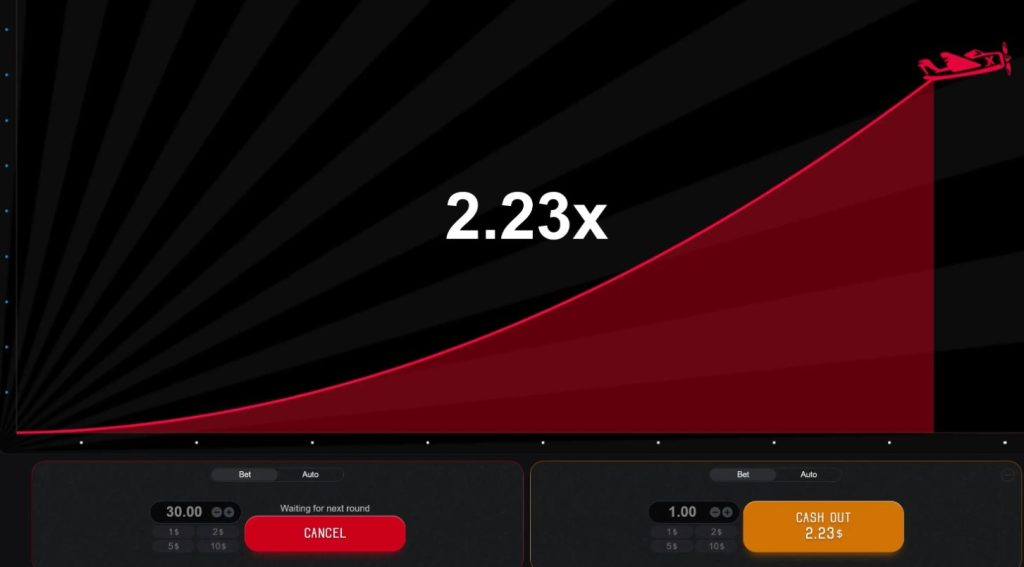
The Aviator demo on 1win is the full game with virtual credits — same Spribe software, same 97% RTP, same Provably Fair system, same dual bet panels, same Auto Cash Out and Auto Play settings. The demo does not run a separate version of the game with different crash point distributions or adjusted payout rates. It is the identical product with the sole difference that the credits are virtual and the results carry no financial consequence.
The demo is accessible without registration and without a deposit — open the 1win Games section, find Aviator, and select the demo option. Virtual credits are available immediately and rechargeable without limit.
What the demo is for
The 1win Aviator demo serves three purposes that the real-money version cannot serve without cost:
- Learning the dual bet system. Reading about two simultaneous bets with independent cash-out decisions is informative. Using them — setting CA$5 on Bet 1 with Auto Cash Out at 1.50x and CA$1 on Bet 2 left to run manually, watching how the two panels interact across 20 rounds — makes the mechanic intuitive in a way that no description can replicate. The demo is where the player discovers whether the dual bet adds value to their experience or adds complexity they do not want.
- Testing Auto Cash Out targets. Setting Auto Cash Out at 2.00x for 50 rounds, then switching to 3.00x for 50 rounds, then to 5.00x for 50 rounds produces a direct comparison of how each target feels across a meaningful sample. The win frequency drops as the target rises. The win size increases. The bankroll volatility changes. Experiencing all three in the demo — with virtual money that makes the comparison emotionally neutral — reveals which target aligns with the player’s tolerance for losing streaks before the streaks involve real money.
- Calibrating session expectations. The most valuable thing the demo can teach is not a strategy — it is a realistic picture of what 100 rounds of Aviator 1win actually looks like. The crash point distribution is weighted toward low values, which means most rounds will end in a loss for any player targeting multipliers above 1.50x. Watching the virtual balance decline across 30 rounds, spike on a single well-timed cash out, decline again for 20 rounds, and spike again sets an expectation pattern that prevents the shock of the same experience with real money. A player who has seen 15 consecutive losses in the demo knows that 15 consecutive losses with real money is not a malfunction — it is the game operating normally.
What the demo cannot replicate
The demo cannot simulate what happens inside the player’s head when real money is on the line. In the demo, a crash at 1.01x — before the multiplier moves at all — produces a shrug. With real money, the same instant crash on a CA$10 bet produces a CA$10 loss with zero opportunity to act, which feels qualitatively different from a crash at 3.00x where the player at least had a window to cash out and chose not to. Both are losses of the same amount, but the psychological impact is different — and that difference influences the next bet in ways the demo cannot prepare for.
The social layer also behaves differently between demo and real money. In the demo, watching other players cash out at high multipliers is abstract information. With real money, watching someone else cash out at 25.00x on the same round where your bet was lost at 1.80x generates a comparison that the demo version does not reproduce with the same emotional weight. The scrolling feed of other players’ results — which is one of Aviator’s most distinctive features — becomes a source of pressure and influence that the demo shows visually but does not replicate emotionally.
1win app Aviator
Aviator is fully accessible on the 1win Android app, iOS app, and mobile browser — with the same Spribe software, the same dual bet system, the same Auto Cash Out settings, and the same Provably Fair verification running identically to the desktop version. For a crash game where the cash-out decision is measured in fractions of a second, the mobile experience is not a secondary consideration — it is the primary way most players interact with the game.
Why 1win Aviator game works on mobile
The game’s interface was designed for mobile from the outset — Spribe launched Aviator in 2019 when mobile-first design was already the industry standard. The elements on screen are minimal: the plane, the multiplier, the cash-out button, and the dual bet panels. No complex grid layouts, no multi-layered bonus interfaces, no landscape-only mechanics. The plane flies. The number climbs. The button is there. The entire interaction fits a phone screen held in one hand without compromise.
Three aspects of the mobile Aviator experience that are specific to 1win:
- App vs. browser — the cash-out timing difference. On the 1win app (Android or iOS), interface elements are cached locally, which means the cash-out button responds fractionally faster than the browser version where each interaction passes through the browser’s rendering engine. In a game where the difference between cashing out at 4.80x and watching the plane crash at 4.85x is measured in milliseconds, the app’s marginally faster response time is not theoretical — it is the kind of edge that players who run 200+ rounds per session notice over time. Whether it is significant enough to justify installing the app depends on session frequency and how close to the edge the player consistently cashes out.
- Push notifications. The app delivers notifications for promotional offers related to Aviator — bonus events, tournament entries, increased multiplier competitions — in the background without the app being open. A player who does not check the 1win promotions page daily can catch time-limited Aviator events through push alerts that the browser version cannot provide. For players who combine Aviator with sports betting on 1win, the same notification system delivers bet results and odds changes alongside the Aviator promotions.
- Biometric login. Face ID, Touch ID, or fingerprint unlock replaces the email-and-password entry after the first login. For players who open Aviator multiple times per day — a few rounds during a commute, a few during lunch, a session in the evening — biometric login saves 15–20 seconds per session. Small individually, noticeable cumulatively.
For players who prefer not to install the 1win app, the mobile browser version provides the same Aviator experience — same dual bet, same Auto Cash Out, same Provably Fair, same game. The differences are the same ones that apply across the entire 1win platform: no push notifications, no biometric login, and marginally slower interface response compared to the native app. Adding 1win to the home screen creates a one-tap shortcut that eliminates the URL entry without the full app installation.
For players whose Aviator 1win sessions consist of 20–30 rounds once or twice a week, the browser is functionally equivalent to the app. For players who run 100+ rounds daily across multiple sessions, the app’s faster response time and biometric login accumulate into a meaningfully smoother experience.
Frequently Asked Questions
What is 1win Aviator?
Aviator is a crash game developed by Spribe — available on 1win and at over 2,000 casinos worldwide. A plane takes off and a multiplier climbs from 1.00x until the plane disappears at a randomly determined crash point. The player decides when to cash out before the crash. The game features a 97% RTP, a dual bet system allowing two simultaneous wagers per round, Auto Cash Out, Auto Play, and Provably Fair verification using SHA-256 cryptography. It is the most played crash game globally with 77 million monthly active users.
Is 1win Aviator real or fake?
Aviator on 1win is the genuine Spribe product — the same software, the same RTP, and the same Provably Fair system that runs at every licensed casino hosting the game. Every round is cryptographically verifiable: the crash point is determined before the plane takes off using a server seed whose hash is published in advance. After the round, the seed is revealed and the player can verify that the result was not altered. The game is real. The signals and predictors that claim to forecast crash points are fake — the distinction matters.
Can Aviator crash points be predicted?
No. The crash point for each round is generated by the Provably Fair system using a server seed, a client seed, and the first three bets in the round. The result is locked cryptographically before the plane takes off. No external program, app, Telegram channel, or algorithm has access to the server seed before the round resolves. Previous round results carry zero predictive information about future rounds — each round is an independent calculation with no memory of what came before.
What is the RTP of Aviator on 1win?
The default RTP set by Spribe is 97% — meaning the game returns CA$97 for every CA$100 wagered over the long term. Some operators may configure Aviator at lower RTP settings (94%–96%). The active RTP on 1win should be verified within the game’s information panel before every session. The difference between 97% and 94% over 2,000 rounds at CA$2 per bet is CA$120 in additional expected loss — not a rounding error.
How does the dual bet system work?
Two separate bets can be placed before each round — each with its own stake and its own independent cash-out button. Cashing out Bet 1 does not affect Bet 2. Losing Bet 2 does not cancel a Bet 1 that was already cashed out. The two bets allow split strategies within a single round: a conservative low-target bet on one panel and an aggressive high-target bet on the other. Using the second bet is optional — many players use only Bet 1.
What is Auto Cash Out?
A setting that automatically cashes out the bet when the multiplier reaches a pre-set target — without the player needing to press anything. If the plane crashes before reaching the target, the bet is lost normally. Auto Cash Out can be set independently for each of the two bet panels, enabling different targets on Bet 1 and Bet 2 simultaneously. The feature removes the emotional, in-the-moment decision and replaces it with a consistent, pre-determined target.
What is the maximum win on Aviator at 1win?
The maximum win per bet is approximately CA$15,000 at 1win. The multiplier itself can reach extreme values on rare rounds, but the payout is capped at the per-bet maximum regardless of how high the multiplier climbs. A CA$10 bet on a round that reaches 2,000x would be capped at CA$15,000 rather than paying the theoretical CA$20,000. The cap should be verified in the game information panel as it may vary between platforms.